.jpg%3Fwidth%3D1000&w=3840&q=75)
Are the Pennsylvania Dutch Amish? What "PA Dutch" Actually Means
By Best of Lancaster
Two corrections in one: the Pennsylvania Dutch aren't from the Netherlands, and most of them aren't Amish. All Amish are Pennsylvania Dutch, but only a small share of the Pennsylvania Dutch are Amish — and once you know the difference, half of Lancaster County suddenly makes more sense: why the food is "PA Dutch" and not "Amish," why the hex signs on barns don't belong to the people in buggies, and what language you're overhearing at the market. Here's the untangling.
First: Why "Dutch"?
It's a centuries-old rendering of Deutsch — German. The Pennsylvania Dutch are descendants of German-speaking immigrants (largely from the Palatinate and surrounding regions) who settled Pennsylvania in the late 1600s and 1700s, many seeking the religious freedom William Penn promised. They brought a dialect, a cooking tradition, and a set of faiths — and "Pennsylvania Dutch" came to cover all of it. Nothing to do with Holland.
The Family Tree, Simplified
- Pennsylvania Dutch = the whole German-Pennsylvanian culture — hundreds of thousands of people across faiths, most of whom drive cars, use smartphones, and blend into modern life completely.
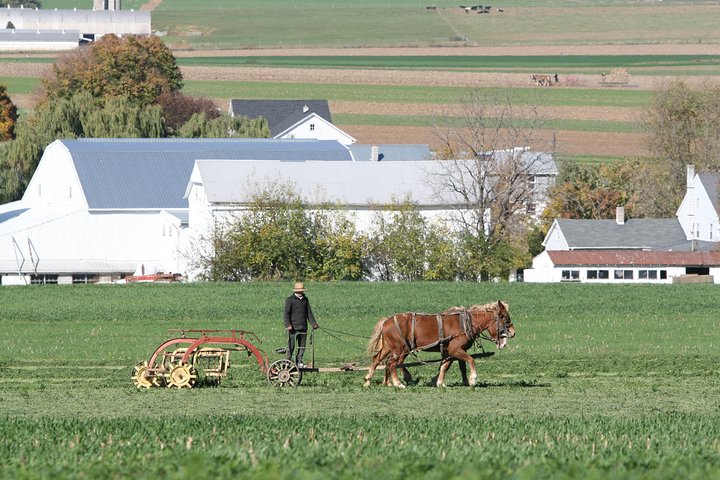
- The "Plain" Dutch = the Anabaptist minority within it: the Amish, Old Order Mennonites, and Brethren — the horse-and-buggy, plain-dress communities visitors come to see (our Amish vs. Mennonite guide splits that branch further).
- The "Fancy" Dutch = the Lutheran and Reformed majority, historically called the "church people" — culturally German-Pennsylvanian without the plain lifestyle.
The Hex Sign Surprise
Those colorful stars and distelfink birds painted on barns across the region? Fancy Dutch, not Amish. The Amish consider decorative display worldly and don't put hex signs on their barns — so that postcard image of a hex-signed barn with a buggy out front is actually two different Pennsylvania Dutch cultures in one frame. Once you know, you can read the countryside: plain white farmhouse, no wires, green blinds — Amish; hex signs and a pickup truck — Fancy Dutch neighbors, probably farming the next field.
The Food Is Pennsylvania Dutch (All of It)
Shoofly pie, chicken pot pie, chow chow, scrapple, whoopie pies, soft pretzels — that's the cooking of the whole Pennsylvania Dutch culture, Plain and Fancy alike, which is why the county's smorgasbords bill it as "PA Dutch cooking." The Amish cook it magnificently (the home meal is the proof), but they didn't invent it alone — it's 300 years of German-Pennsylvanian farm kitchens. Full delicious detail in the Lancaster food guide.
The Language You'll Overhear
Pennsylvania Dutch is also a living language — a German dialect still spoken at home by the Amish and Old Order Mennonite communities (children typically learn English at school). Listen at Central Market or the Green Dragon and you'll hear it between vendors. Among the wider Fancy Dutch population the dialect has mostly faded, which makes Lancaster's Plain communities its stronghold — one more reason the county feels like nowhere else.
Why the Confusion Persists
Tourism shorthand, mostly — "Dutch Country," Dutch Wonderland, "Amish Country" all get used interchangeably for the same farmland. The practical translation for visitors: "Pennsylvania Dutch" on a menu or a shop sign means the regional German culture; "Amish" means the specific plain community — and businesses run by actual Amish families (the buggy rides, the roadside stands, the quilt shops) will close Sundays, which is often your quickest tell.
Meet the Culture Properly
The guides who explain this best are often Mennonite and Pennsylvania Dutch themselves — the small-group farm visit covers exactly this history with people who live it:

Then see it on the ground: where the Amish actually live, the Landis Valley Museum (the state's living museum of Pennsylvania Dutch rural life, Fancy and Plain), and the etiquette guide before you go. New to all of it? Start with the first-timer tips.
Learn It From the People Who Live It
The cultural experiences where the Pennsylvania Dutch story gets told firsthand.